Maintaining home utilities is an essential part of responsible property care. When winter approaches, compact residential heating hardware bears the heavy burden of keeping living spaces warm and comfortable. While major mechanical failures require certified expertise, proactive homeowners can handle several basic diagnostic checks and upkeep tasks to prevent unnecessary wear, minimize utility bills, and spot small defects before they escalate.
Essential safety checks before servicing your compact heating setup
Before touching any valve or opening an access panel, your first priority must always be personal and structural safety. Modern heating hardware combines pressurized water lines and high-voltage wiring within a restricted footprint, making a methodical approach essential.
Always shut off the dedicated circuit breaker supplying power to the heating appliance before conducting any close visual inspection. Even when simply inspecting external fittings, de-energizing the unit eliminates the risk of electric shock from unexpected condensation drips or frayed cabling. Next, allow the system to cool down completely. Working around scalding pipes or pressurized vessels can cause severe burns. Once the unit is cold and powered down, examine the casing and surrounding wall for signs of moisture, scorch marks, or corrosion around fittings. If you rely on a modern electric water boiler to handle your central heating demands, checking that its clearance zones remain completely free of stored boxes and household debris is vital for adequate ventilation and easy shutoff access.
Routine DIY maintenance steps to keep heat circulating efficiently
Over months of continuous operation, air bubbles and metallic debris naturally gather inside residential circulation loops, forcing pumps to work harder and creating cold spots across rooms.
Bleeding your radiators is one of the most effective DIY repairs you can perform. With the circulation pump turned off, insert a radiator key into the bleed valve at the top of each panel, turning it counterclockwise until trapped air hisses out. Close the valve the moment a steady bead of water appears. In addition, inspect your magnetic system filter if your pipe layout includes an external isolation valve. By closing the isolation valves, unscrewing the filter lid, and wiping the magnetic core clean of captured iron sludge, you instantly restore smooth flow across the network. If your property utilizes a wall-mounted electric system boiler, keeping this closed-loop fluid clean directly protects the internal heating elements from premature mineral scale buildup.
Troubleshooting common pressure drops and minor system leaks
A sudden drop in heating performance often stems from fluctuating system pressure rather than catastrophic mechanical failure. Most residential closed-loop setups operate reliably between 1.0 and 1.5 bar when cold. Checking your pressure gauge monthly allows you to address subtle pressure losses early.
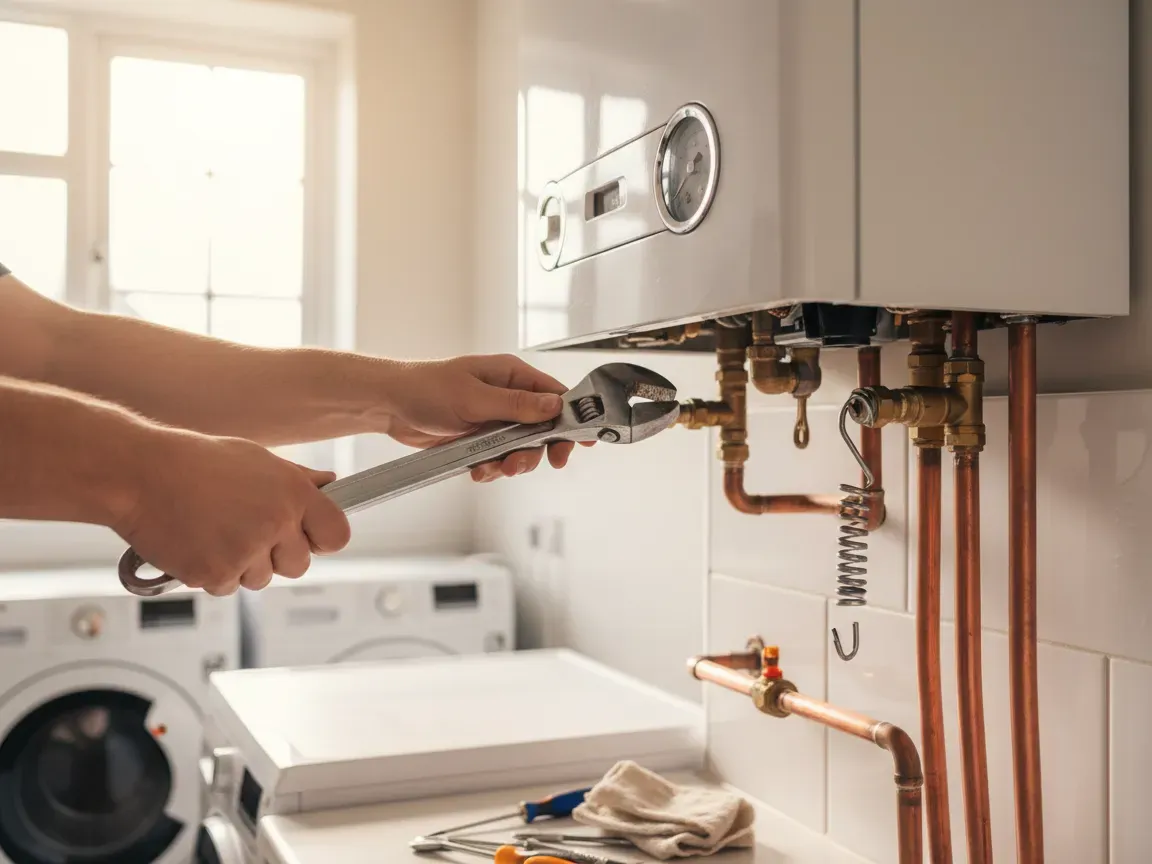
If the gauge drops below 1.0 bar, locate the external filling loop, which typically consists of a braided flexible hose with two small ball valves. Open both valves gradually until the dial climbs back into the optimal green zone, then close them tightly. After repressurizing, run a dry paper towel along visible compression joints, isolation valves, and pipe elbows. If you notice slight weeping around a threaded fitting, carefully tightening the compression nut a quarter turn with an adjustable wrench is often enough to seal the connection without warping the copper pipe.
Recognizing the warning signs that require a certified technician
Effective DIY maintenance also means knowing where personal repairs stop and professional hazards begin. Certain symptoms indicate complex internal failures that demand specialized diagnostic instruments.
Never attempt to dismantle internal heating elements, pressure relief valves, or control circuit boards yourself. If you observe rapid pressure surges that repeatedly trigger the safety discharge pipe, an internal expansion vessel bladder may have ruptured. Likewise, persistent humming noises from the circulator pump, electrical burning smells, or water leaking from inside the main sealed cabinet require professional intervention. Addressing simple visual checks yourself while leaving heavy electrical and sealed-combustion repairs to certified technicians guarantees your heating hardware remains safe, reliable, and compliant with local building codes.